
What is the Difference between Acupuncture & Dry Needling?
The Difference Between Acupuncture & Dry Needling
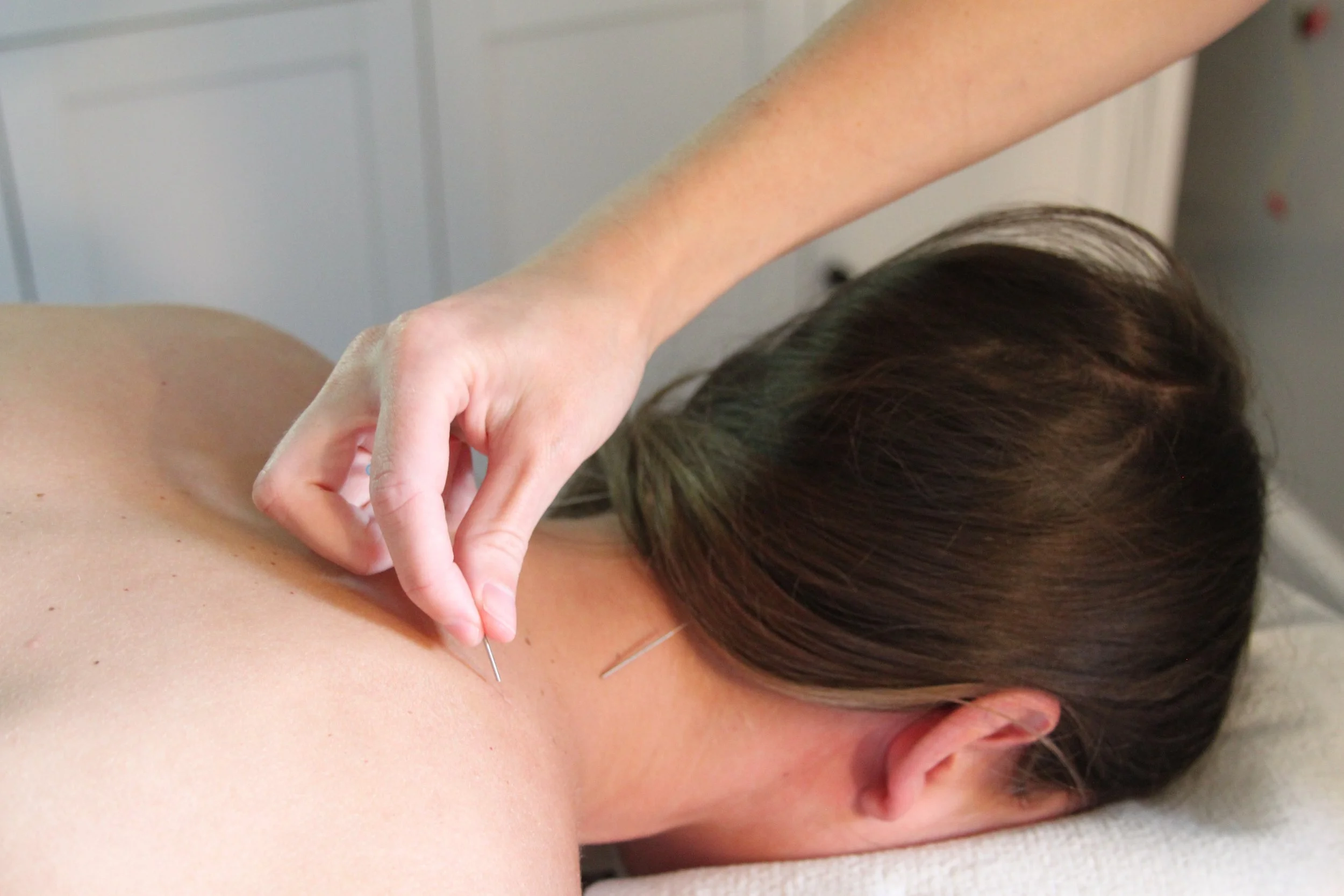
Dry Needling and Acupuncture both use fine, solid & sterile needles inserted into the body to relieve pain. However, there are several main distinctions between these two therapies.
Dry needling is a fairly new medical technique, developed in the 1980s by western medical practitioners. Dry needling involves the insertion of needles directly into the affected muscle and manipulation in order to obtain a muscle twitch or release to relieve persistent muscle pain.
Dry needling therapy was developed for chronic and persistent pain patients - practitioners decided to originally try this method using hollow syringe needles without any injectable, hence the term “Dry needling”.
Today, dry needling is performed by Physical therapists, Chiropractors, and some MDs with additional education as part of their toolkit to treat persistent muscular pain.
Acupuncture is performed in South Carolina only by Licensed Acupuncturists. Acupuncturists learn the Chinese Medicine Meridian systems alongside Western physiology. Acupuncturists learn several needling techniques during their education, and will often use a combination of several techniques within one acupuncture visit. Acupuncture uses both local and distal (non local) needles along associated channels to encourage circulation, guide energy flow from muscular releases, address imbalances surrounding the injury or area of pain, and treat the underlying cause of the muscular stiffness.
The Difference between Acupuncture & Dry Needling
The Practitioner
in South Carolina, Acupuncture is only performed by Licensed Acupuncturists (LAcs) or Medical Doctors (MDs) who have undergone additional training.
Dry Needling can be performed by Physical therapists (PTs), Chiropractors (DCs), and Medical Doctors (MDs/DOs)
The Training
Acupuncturists undergo over 3,000 hours of instruction and clinical training focused on needling technique and manipulation, local anatomy, needle depth, and meridian trajectories.
Medical Doctors, PTs, and MDs undergo 220-300 hour programs as additional education to learn dry needling, building on their own practice.
The Technique
Acupuncture combines needling techniques and can utilize more aggressive trigger point technique as well as more gentle low/no stimulation techniques. Needles are then retained for 10-45 minutes as the body responds to the treatment.
Dry needling is performed locally at the affected muscle and needles are manipulated to get a jump response. Needles are usually pulled after a response is obtained.
Orthopedic Acupuncture in Charleston & Mount Pleasant SC
Victoria Ansell, LAc., has a special interest and passion in treating chronic pain, migraines, musculoskeletal pain, and sports injury in her practice. Her approach utilizes techniques like trigger point acupuncture, a very similar needling style to dry needling that seeks the active release of muscle knots, alongside traditional Chinese medicine meridian theory which incorporates distal (non local) points along associated channels to address the entire fascial plane. Victoria also commonly employs other modalities when treating musculoskeletal pain such as gua sha, cupping, and electrical stimulation. Treatments are always personalized to the individual, their tolerance, and their needs.